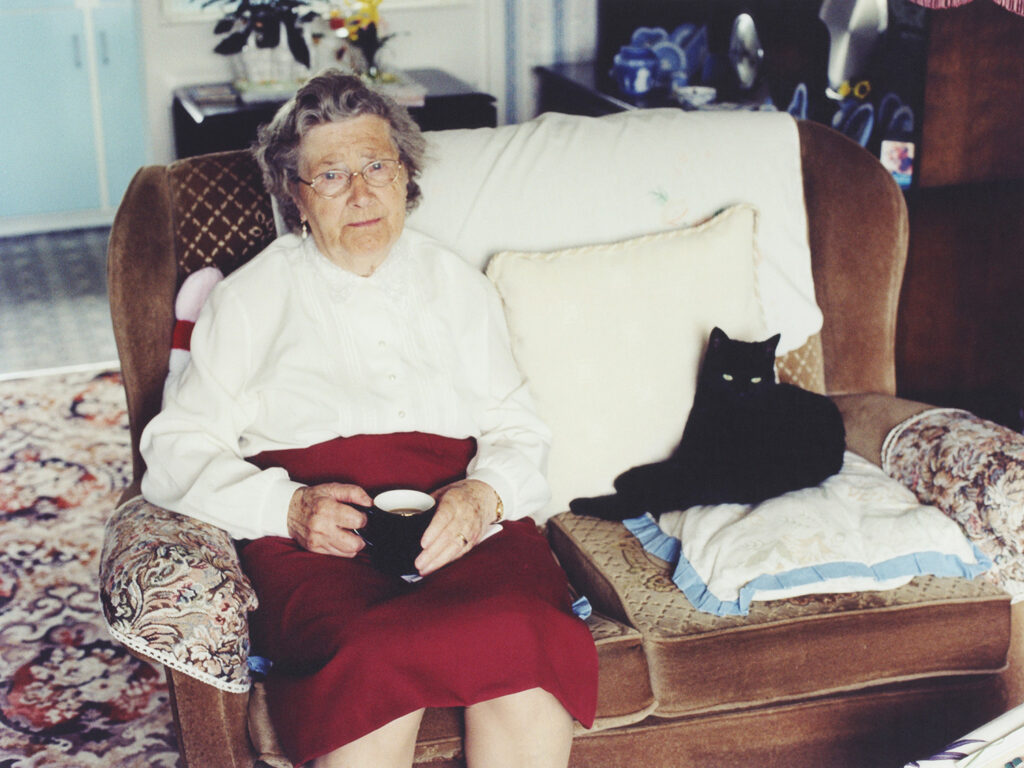
In 1997, I was 21 years old. I had left university and, with the money I saved from countless part-time jobs, I bought a round-trip ticket to Heathrow Airport in England. With only a return ticket in my pocket and a backpack on my shoulders, I began a spontaneous journey with no set plan. Along the way, I decided to visit a small country town called Bakewell.
I knew of it from an article I had read in the magazine FIGARO when I was in high school. It was a special feature on “Beautiful English Country Towns to Visit Once in Your Lifetime.” I was captivated by the photos of a green, lush town with an old church, and the article mentioned that the local Bakewell Pudding was delicious. I held onto that magazine for years, dreaming of the day I would go.
At 21, that day had finally come. In an era before the internet was widespread, every part of the journey was an adventure. According to the old magazine, the way to get to Bakewell was to take a train from London to a station called Sheffield, and then a 30-minute taxi ride. I figured the locals didn’t take a taxi every day, so there must be a bus. I found a bus driver parked in front of the station and asked him. Me: “Excuse me, I want to go to Bakewell. Is there a bus that goes there?” Driver: “No, there isn’t.” Me: “Oh…” Driver: “Why do you want to go to Bakewell?” With my limited English, I couldn’t explain the complex story. So, I gave the simplest, most honest answer I could. Me: “I want to eat a Bakewell Pudding.” The driver burst out laughing. “Okay,” he said. “Get on.” He let me on his bus and took me to the main terminal where the bus to Bakewell departed. He then spoke to the driver of that bus. “This girl wants to go to Bakewell just to eat a Bakewell Pudding,” he explained. “Please take care of her.” When my bus departed, an announcement came over the speaker for all the passengers to hear: “This girl is going to Bakewell because she wants to eat a Bakewell Pudding, so let’s all look after her.”
As we got close to Bakewell, an elderly woman started talking to me. “Do you have a place to stay?” she asked. I told her I was going to look for one. After we got off the bus, she kindly walked me to the local information center, but it was closed. For a moment, the thought of sleeping on the streets crossed my mind. As I stood there, stunned, the woman said, “Wait here for a moment,” and disappeared. About 30 minutes later, she returned with an elderly couple. “Go with them,” she said. “You can stay at their house.” That couple was Ruby and Eric.
I ended up staying with them for a full week until my scheduled train back to London. Every morning, my day began with Eric bringing a cup of tea to my room. “When you’ve finished that,” he’d say, “come downstairs for breakfast.” We spent the week doing laundry together, gardening, and going shopping. On days there was a service, they would take me to church. Sometimes, they would pack me a bento box for lunch and say, “Go for a walk to the next town over today.” Ruby was a wonderful cook, and her dinners were delicious. In return, I would always wash the dishes. In the evenings, we would sit in the living room, watching their favourite dramas on TV while drinking sherry. For that one week, I felt like I was their own grandchild.
On the day of my departure, I asked them how I could ever repay their kindness. They hugged me and said, “Just come and show us your face again while we’re still alive.” Two years later, I returned to Bakewell to see them. And I visited again two years after that. Each time we said goodbye, they would hug me and say the same thing.
The fourth time I visited, Eric was no longer there. He had passed away the year before. During that stay, Ruby and I did the same things: laundry, shopping, going to church, and watching TV at night while drinking sherry. It was the same unchanging daily life, but now it was Ruby who brought me tea every morning. By this time, I was working as an assistant in a photography studio. My backpack was the same, but now, it wasn’t just a return ticket I carried, but also a camera. My photo series, “Dear Ruby,” is a collection of images that captures the quiet, peaceful daily life of Ruby, spending her days with grace even after becoming alone.
Two years after that, I visited Bakewell again, this time with the photographs of her.
In 2007, my series “Dear Ruby” received the Minister of Economy, Trade and Industry Award at the APA AWARDS.